
2026 Guide
How Much Does Fence Installation Cost in Spokane?
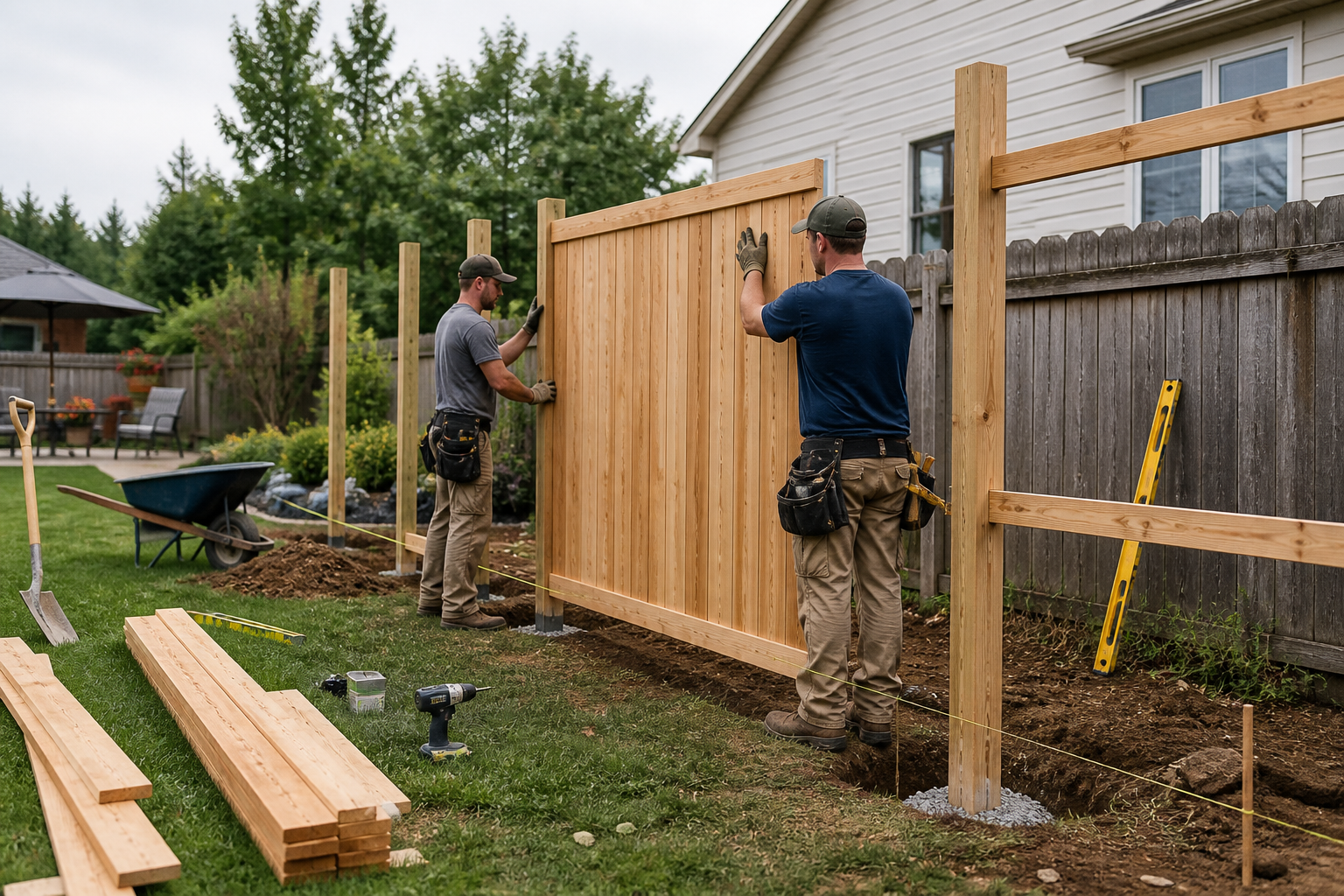
If you're pricing out a fence in Spokane, you've probably noticed that getting a straight answer online is harder than it should be. National averages don't account for local labor, material availability, or the kind of terrain that shows up in a lot of Spokane yards. This guide does.
What Spokane Fence Installation Actually Costs
The honest range for fence installation in Spokane runs from $18 to $65 per linear foot, fully installed. That spread is wide because material choice is the biggest cost variable, not contractor markup.
Here's a quick breakdown by material:
| Fence Type | Cost Per Linear Foot (Installed) |
|---|---|
| Chain Link | $18 - $28 |
| Wood (Privacy) | $25 - $40 |
| Vinyl | $30 - $50 |
| Ornamental Iron | $40 - $65 |
| Split Rail | $15 - $25 |
A standard 150-linear-foot privacy fence in Spokane, enough to enclose a typical backyard, will usually land between $3,750 and $6,000 for wood, or $4,500 and $7,500 for vinyl.
What Affects the Final Price
Material is the starting point. Everything below moves the number up or down from there.
Terrain and soil conditions
Spokane's mix of rocky terrain, hillside lots, and clay-heavy soil in some neighborhoods directly affects post installation. Rocky ground means more labor per post. Sloped yards require step-style or racked fence panels, which take longer and cost more.
Linear footage and layout complexity
Straight runs are the cheapest to install. Every corner, gate cutout, or irregular angle adds time. A fence with four corners and two gates costs more per foot than a straight 100-foot run, even with identical materials.
Gates
Gates are priced separately from the fence run. A basic wood walk gate runs $150-$350 installed. A double drive gate in ornamental iron can reach $800-$1,500 depending on width and hardware.
Removal of an old fence
If there's an existing fence coming down, expect to add $3-$8 per linear foot for removal and disposal. Posts set in concrete take more time.
Permits
Spokane requires a fence permit for structures over six feet tall and for fences in certain zoning districts. Permit costs are typically $50-$150 and take a few business days to process.
Material Breakdown: What You're Actually Getting
Wood
Wood fences are popular in Spokane because they look right on most properties, they are easy to customize, and they are repairable. Cedar handles moisture and temperature swings better than pine. Expect staining or sealing every 3-5 years.
Vinyl
Vinyl costs more upfront than wood but requires almost no maintenance. No staining, no sealing, no rot. It holds color well in Spokane's sun exposure and does not warp through freeze-thaw cycles the way wood can.
Chain link
Chain link is the most cost-effective option when function matters more than aesthetics. It works for utility areas, dog runs, commercial perimeters, and side yards.
Ornamental iron
Ornamental iron frames the property without closing it off. It fits front yards, driveways, and properties that need security without privacy.
Split rail
Split rail fencing defines a property line or garden edge. It is not a privacy fence. It works well on larger rural and semi-rural properties around Spokane.
Repair vs. Replace: When to Do Each
Not every fence problem needs a full replacement. Repair often makes sense when one or two posts are leaning, a gate is dragging, or only a few boards are rotted.
Replacement usually makes more sense when more than 30% of the fence has structural problems, the posts are soft, or the fence is over 15 years old and showing widespread wear.
What to Bring to the Estimate
- Approximate linear footage.
- How many gates you need.
- A material preference, even a loose one.
- Notes about grade changes, tree roots, or old fence removal.
- A reference photo if you have a style in mind.
You do not need everything figured out. The more you bring, the faster the estimate moves.
Getting a Quote in Spokane
Clear quotes, clean installs, and accurate scopes are what separate a fence job that goes smoothly from one that does not. The estimate conversation is where you figure out which kind of contractor you are dealing with.
Ready to get a number? Tell us the material, the reason, and the location. We'll take it from there.
Get Your Free Quote